
Move Orthopaedics: Where expertise meets humanity
A practice built on collaboration, accountability and care
At Move Orthopaedics, expertise is essential, but it is not enough on its own. What defines the practice is the way clinical excellence is paired with humanity, collaboration and genuine care. Move was not created to feel corporate or distant. It was created to feel safe, connected and deeply human. Move began when three surgeons recognised a fundamental problem in private practice.
Too often, clinicians work in isolation. In academic environments, surgeons are part of a unit, a space where cases are discussed, decisions are challenged and learning happens collectively. In private practice, that structure disappears.
“In academia, you have a unit, a space to talk, problem-solve and innovate. In private practice, you suddenly work alone. We wanted to rebuild that space.” - Betty explained

Dr Peter Hardcastle, Dr Johann Groenewald and Dr Stefan Wever came together intentionally to create something different. Their collaboration was not accidental.
They selected one another because they shared the same standards, values and approach to care. Collaboration, accountability and clinical excellence were non-negotiable from the start. Each surgeon brings deep experience across hips, knees, ankles and feet, but what truly sets the group apart is how they work together.
They question one another, review cases, ask for input and hold each other to a consistent clinical standard. This peer accountability strengthens decision-making and ultimately improves patient outcomes.
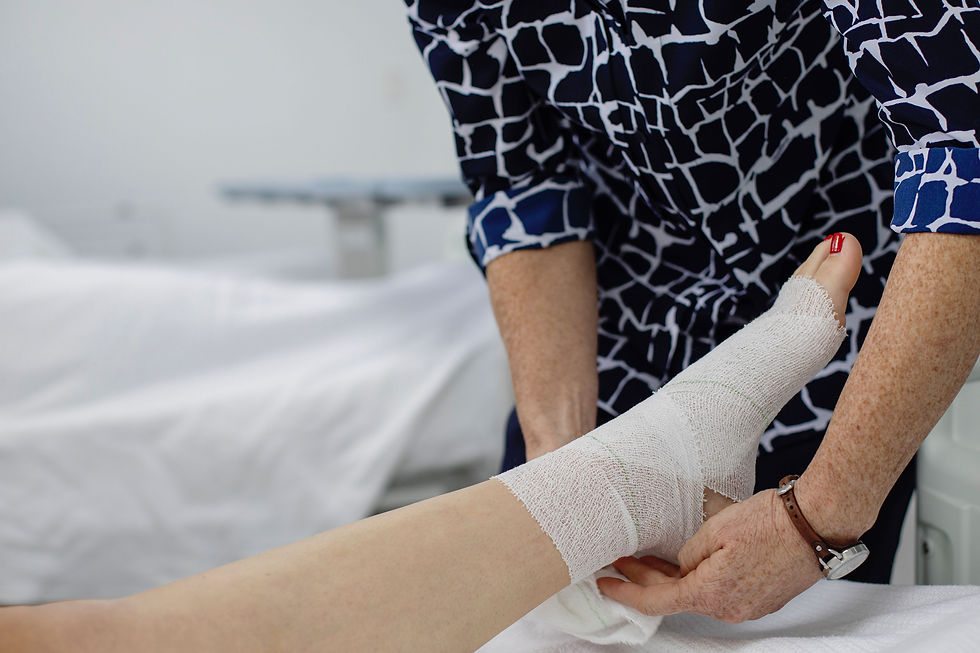
This way of working extends far beyond the surgeons. Move Orthopaedics functions as a connected ecosystem that includes nurses, patient coordinators, wound care support and administrative teams. Departments exist, but hierarchy does not dominate. Every contribution is valued, because every role influences the patient experience.
For patients, this matters deeply. Many arrive at Move facing their first surgery, their first knee arthroscopy, their first hip replacement or their first ankle surgery. For them, everything is unfamiliar. Expectations are high, uncertainty is real and fear is often present. Move intentionally creates a space where patients feel safe to ask questions, express concerns and understand what lies ahead.
The practice works hard to remain personal and approachable. Systems and automations are used carefully, not to remove human contact, but to protect it. By reducing administrative burden, clinicians have more time with patients. Innovation exists to support care, not replace connection.

Behind the scenes, a significant amount of work happens that patients may never see. The administrative and coordination teams manage authorisations, prosthesis limit investigations, medical aid motivations and complex processes that patients rarely understand. This “engine at the back” exists so that information can be distilled, explained clearly and handled on the patient’s behalf. This level of support cannot exist in isolation. As a collective, Move can share resources, invest in better tools and create continuity of care. When a surgeon is on leave, patients are not handed over to a random doctor on call. They remain within a trusted network of clinicians who know their history and uphold the same standards of care. This is what makes Move Orthopaedics different. Not perfection. Not claims of being the best. But a willingness to work transparently, to share what is working, to remain accessible and to continually learn as a team. As the team often says, “We are still figuring it out. We are on a journey, and we are happy to share what is working for us.” Move Orthopaedics is a place where expertise meets humanity, where patients feel seen, and where every step is designed to restore movement, confidence and quality of life.


Comments